
By: Ofir Yossef Cohen Touval | Path of Living Waters
The verse "You shall not make for yourself a graven image, nor any likeness" (Exodus 20:4 – one of the Ten Commandments) does not speak only about outward idolatry.
The Kabbalists and Chassidut teach that it addresses a subtle and very everyday place: the human being himself.
The Graven Image – A Frozen Soul
The Zohar states a sharp rule:
"Those who serve graven images – serve the dead"
— Zohar, Part 2, 88a
A graven image (in Hebrew pesel, a carved statue) is a dead thing. It has no movement and no vitality.
And here the depth is revealed:
when a person becomes fixed in one identity – "That's just who I am," "It's too late to change," "That's my personality" – he creates an inner graven image.
The Zohar adds:
"There is no vitality except in a place of movement"
— Zohar, Part 3, 152a
As long as there is movement – there is life.
Fixation is a subtle spiritual death.
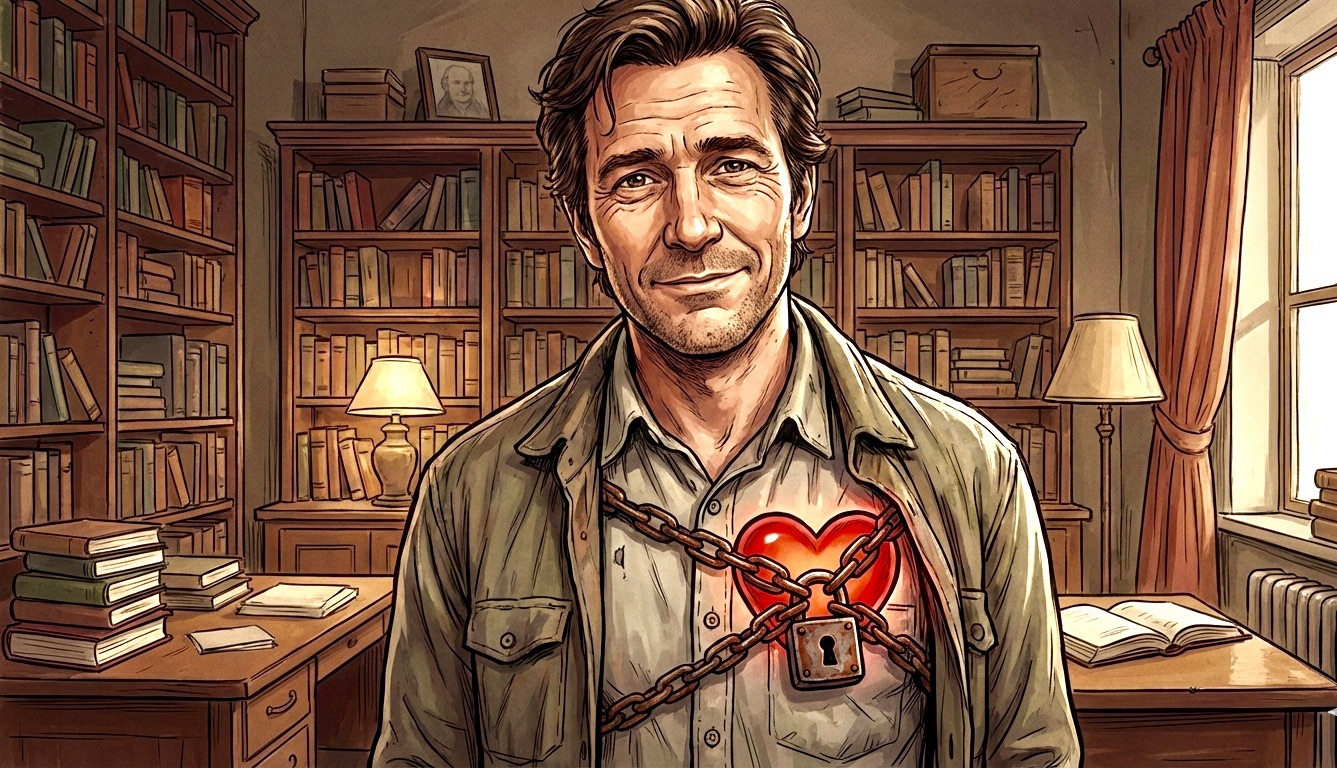
For example, a heart of stone:
• A person who was hurt in the past and decides: "I'm not opening up again."
• A woman who carries disappointments and stops feeling so as not to be hurt.
• A parent who says: "That's how I was raised, and there's nothing to change."
None of these are bad people – they are simply exhausted.
The heart hardens and turns to stone in order to survive, but the price is the loss of vitality.
And of this it is said:
"And I will remove the heart of stone… and give you a heart of flesh" (Ezekiel 36:26)
— as expounded in the Zohar, Part 3, 214b:
"A heart of stone – a heart that does not feel."
A heart of flesh is not a weak heart –
but a living heart: feeling, responding, changing.
The Mask – How I Want to Be Seen
If the graven image is fixation, the mask (masechah – read here as the "molten image" in the related verse, Exodus 34:17, and as the Hebrew word for a mask) is concealment.
"Masechah" shares a root with "masach," a screen – a partition between the light and reality.
The Baal Shem Tov (the 18th-century founder of Chassidism) says, with sharp simplicity:
"Falsehood is when a person shows himself to be other than what he is"
— Keter Shem Tov, section 151
Falsehood is not only in speech – but in an identity that is not faithful to one's inner self.
Examples of common masks from everyday life:
• A person who smiles all the time so that no one will see his pain.
• A woman who excels, pleases and gives – only in order to be worthy of love.
• A parent who feels he must appear strong, knowledgeable and mature – even when he is tired and empty.
The mask is born of fear:
If they really see me – maybe they won't love me, they'll reject me, they'll judge me!
But Chassidut reveals a deep truth:
"The desire to be seen – is the greatest barrier to the divine light"
— Keter Shem Tov
The light does not need a show or masks.
It flows precisely when we remove the mask, when we show our wounds, our fear, our inner truth. (This is the spiritual side of Purim, the festival of masks.)
Truth – Harmony Between Inside and Outside
The foundational book of Chabad Chassidut defines truth this way:
"Truth is when the inner and the outer are equal"
— Tanya, chapter 13
Not perfection. Not imagined holiness.
But coherence.
When what I feel, think and say meet – the screen melts. And the light breaks through.
A Daily Contemplation – Removing the Graven Image and the Mask
A person's work is not to be "someone else,"
but to remove what prevents him from being true and alive.
• To agree to change – even if it is unsettling.
• To agree to feel – even if it hurts.
• To agree to be seen without a mask – even if it is frightening.
This is a living interpretation of "You shall not make for yourself a graven image and a mask":
Do not sanctify fixation.
Do not worship an image.
Choose life.
A contemplation in the way of Living Waters:
• Where in my life am I acting from a heart of stone, just so as not to be hurt?
• Which mask do I wear so that people will appreciate or love me?
• What would happen if I took it off – even for one moment?
There, exactly there,
the light begins to flow.
Enjoyed it? ❤️ Share it so others can read it too:
📖 The book in English (Amazon) | 🎥 YouTube | 💬 Daily WhatsApp updates (Hebrew) | 🎧 Spotify | 👍 Facebook | ✍️ Blog
 📖 The book "Path of Living Waters"
The soul is thirsty. The path begins within – clinical psychology and Kabbalah in one language.
About the book, free sample & purchase ▾
Someone says one word, in one tone, and something inside you explodes. Who is really holding the remote control to your buttons?
A journey of healing that unites clinical psychology with the wisdom of Kabbalah and Chassidut – for anyone who feels that pain is a letter from the soul, asking us to return to our source. Written by Ofir Yossef Cohen Touval, clinical psychologist, out of more than three decades of therapeutic work in Israel and Germany.