
By: Ofir Yossef Cohen Touval | Path of Living Waters
Friends, how many times have you promised yourself that this time it would be different? That you won't get angry, won't procrastinate, will start exercising, will stop scrolling at night. The decision was sincere. The desire was real. And after a week – everything was back where it was.
This doesn't happen because you are weak. It happens because a behavior pattern is not a decision – it is a deep groove engraved in the soul over years. And that groove is not changed in a moment. It is changed drop by drop.
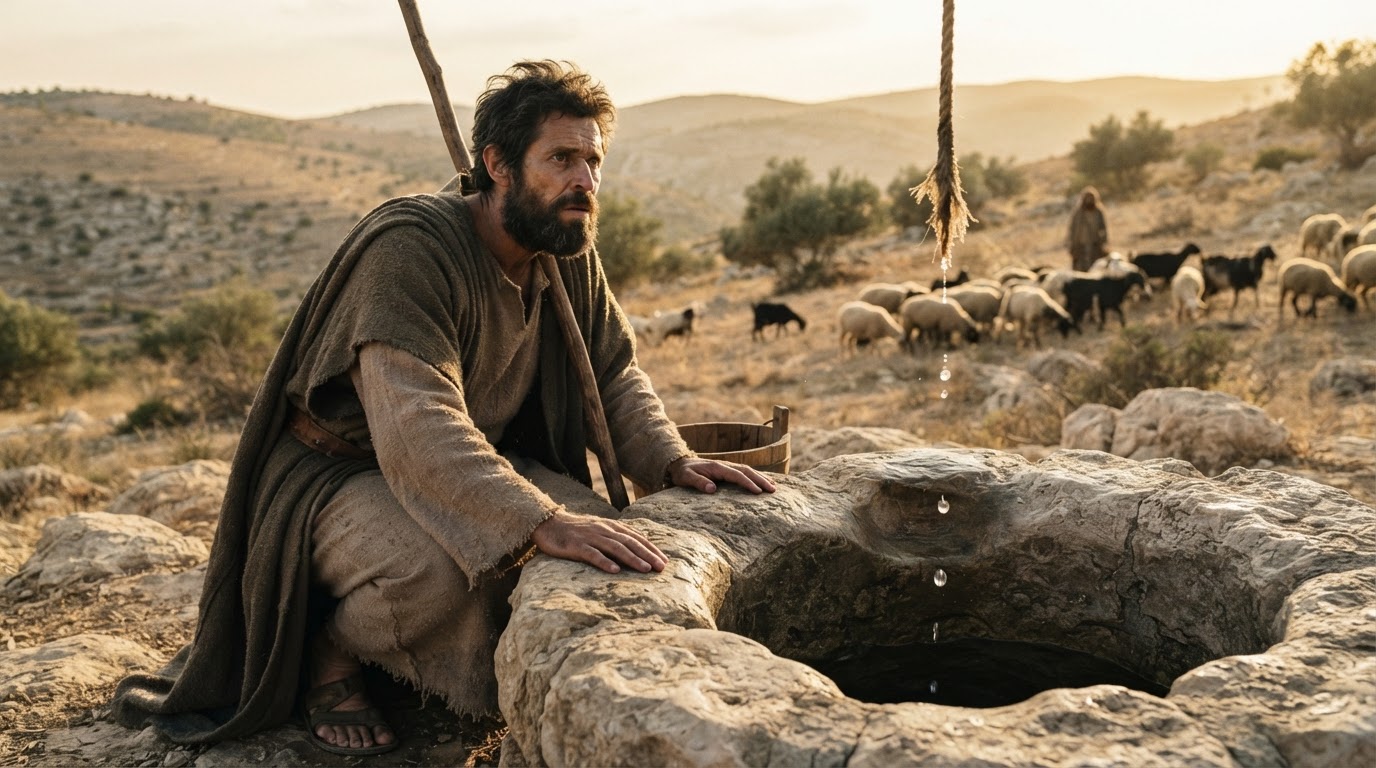
The stone and Rabbi Akiva
Avot de-Rabbi Natan (chapter 6) tells of Rabbi Akiva, who until the age of forty had learned nothing. One day he stood at the mouth of a well and saw a stone that had been hollowed out. He asked: "Who carved this stone?" They told him: the water that falls on it constantly. He said: "If something soft can carve something hard – words of Torah, which are hard as iron, how much more so will they engrave my heart, which is flesh and blood." And from that day on he began to learn – and became Rabbi Akiva.
There are two lessons here. The first: change is possible at any age. The second: it does not come all at once. What carves the stone is not one great wave, but small drops falling again and again.
Maimonides: practice until it becomes nature
Maimonides, in his Laws of Character Traits (1:7), explains how to change a trait: a person should repeat the actions that follow the middle path, and do them again and again, until they become easy for him and no longer a burden, and the traits become fixed in his soul.
In other words, we don't wait to feel different in order to act differently. We act differently – again and again – until we begin to feel different. And the classic Sefer HaChinuch put it in one short sentence: "The heart follows the actions."
Why the old pattern returns
A behavior pattern forms because once it helped us. Someone who avoids confrontation learned that confrontation is dangerous. Someone who eats when stressed found comfort in it. Someone who procrastinates protects themselves from the fear of failure. The pattern is not "bad"; it is an old solution to an old problem.
So it is not enough to fight the behavior. We also need to understand the need it fills, and find another – healthier – way to fill it. Otherwise the need will simply find itself a new pattern.
A practical path to change
Choose one pattern. Not ten. One. Rabbi Akiva didn't decide to become the greatest sage of his generation; he started with the alphabet.
Ask what the pattern gives you. Rest? Protection? A sense of control? What is the need underneath?
Set a very small action, every day. One drop. Not a test of heroism.
Forgive yourself for the falls. "The righteous falls seven times and rises." Falling is part of the process, not its end.
Seek support. Deep patterns, especially those formed in childhood or around trauma, change better within a therapeutic relationship.
The heart is engraved
One day you will discover that something has changed. That the new response no longer takes effort. That the stone has been carved. It won't happen on the day you made the big decision, but after hundreds of days of small drops.
At the Path of Living Waters clinic we accompany this process – identifying the root of the pattern, answering the need beneath it, and building together, drop by drop, a new habit that becomes nature.
📖 The book in English (Amazon) | 🎥 YouTube | ✍️ Blog
 📖 The book "Path of Living Waters"
The soul is thirsty. The path begins within – clinical psychology and Kabbalah in one language.
About the book, free sample & purchase ▾
Someone says one word, in one tone, and something inside you explodes. Who is really holding the remote control to your buttons?
A journey of healing that unites clinical psychology with the wisdom of Kabbalah and Chassidut – for anyone who feels that pain is a letter from the soul, asking us to return to our source. Written by Ofir Yossef Cohen Touval, clinical psychologist, out of more than three decades of therapeutic work in Israel and Germany.